Fourth Log: 15 November 2022
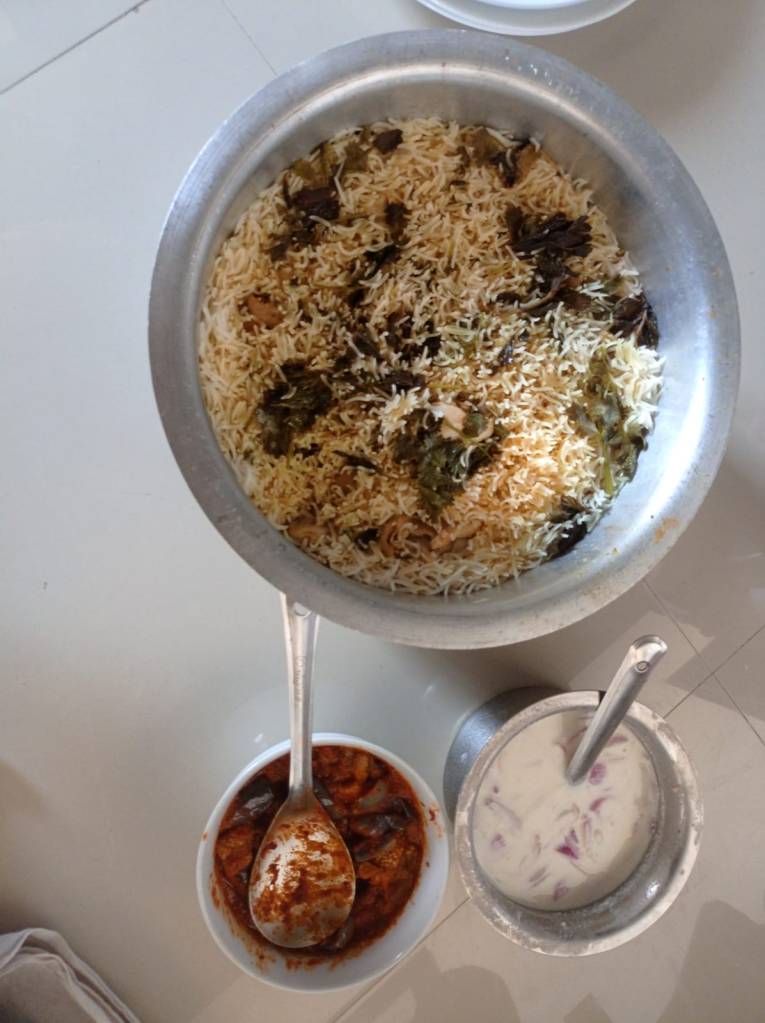


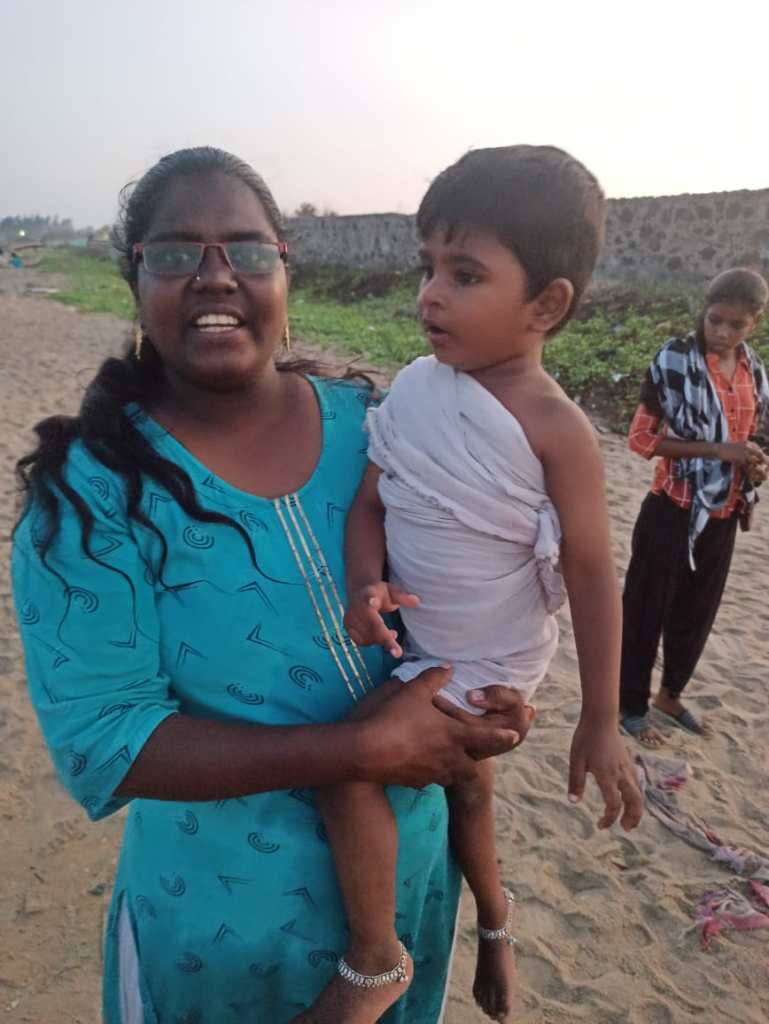

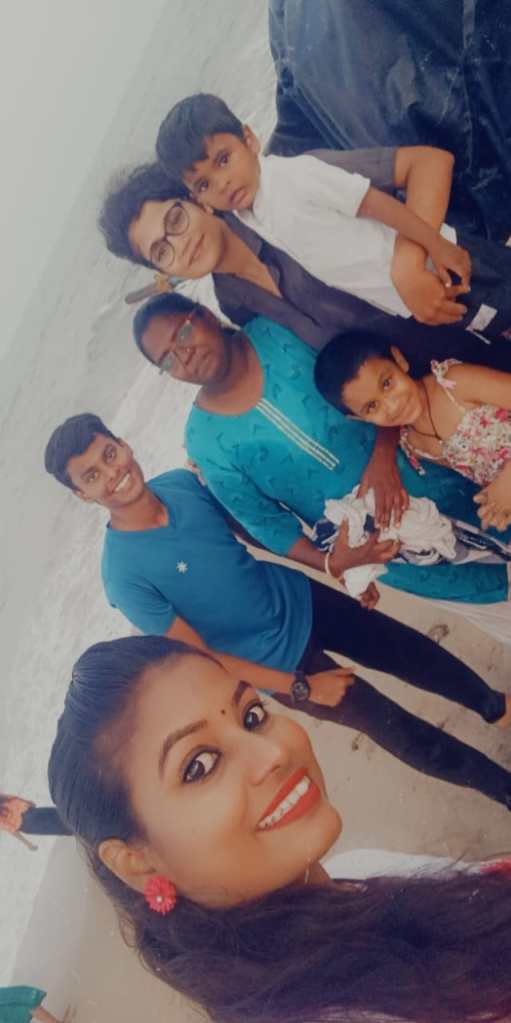

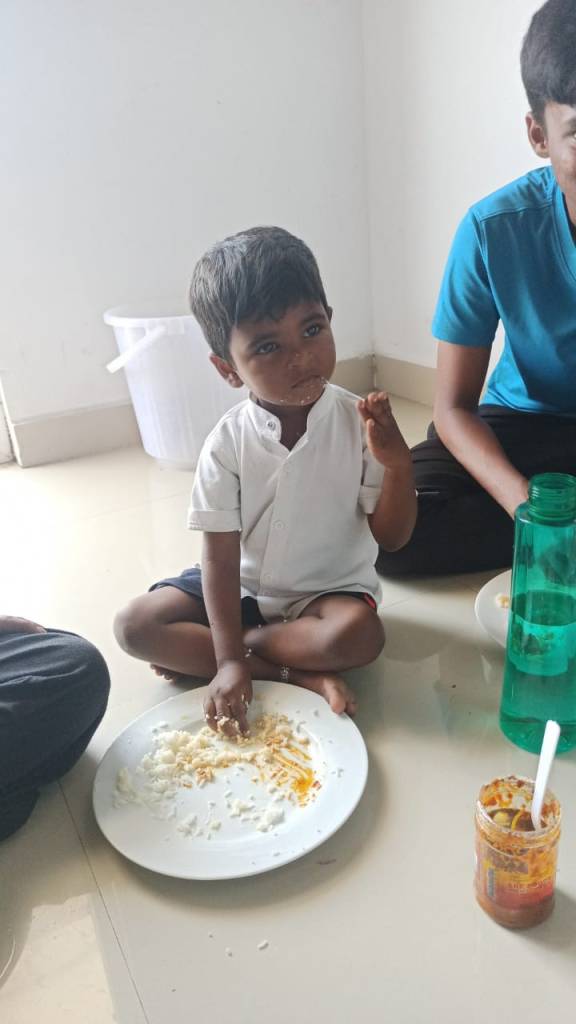


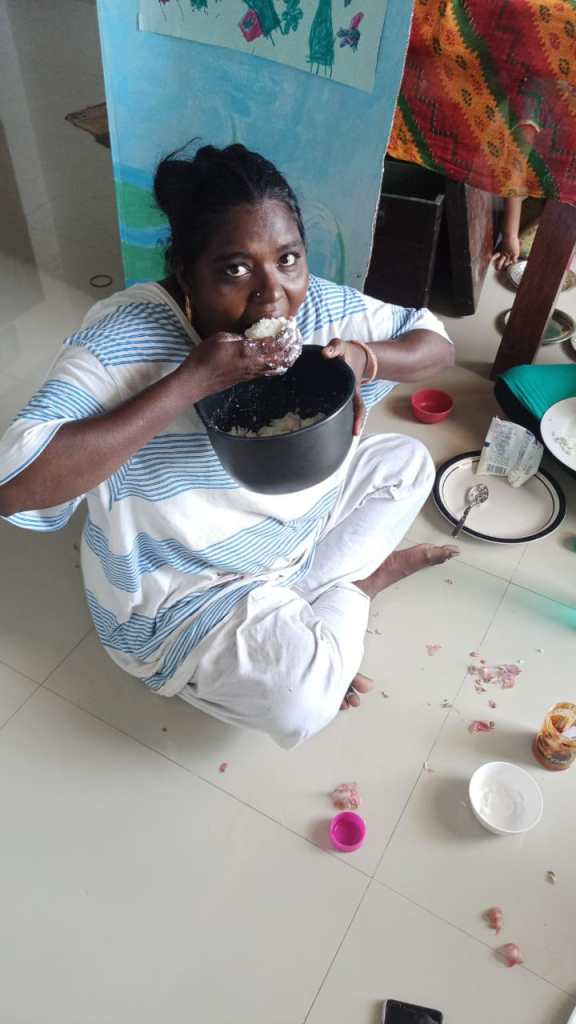
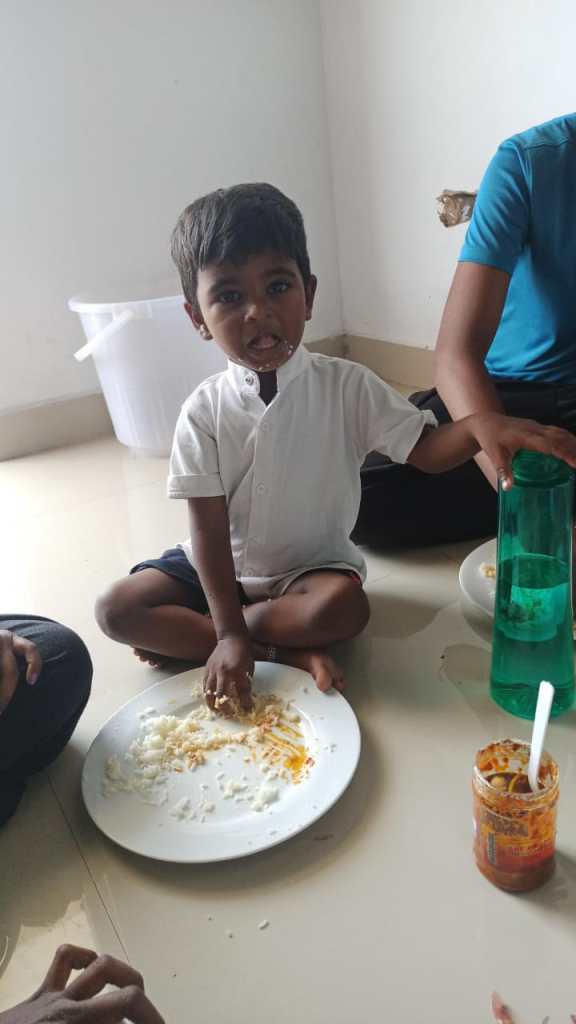
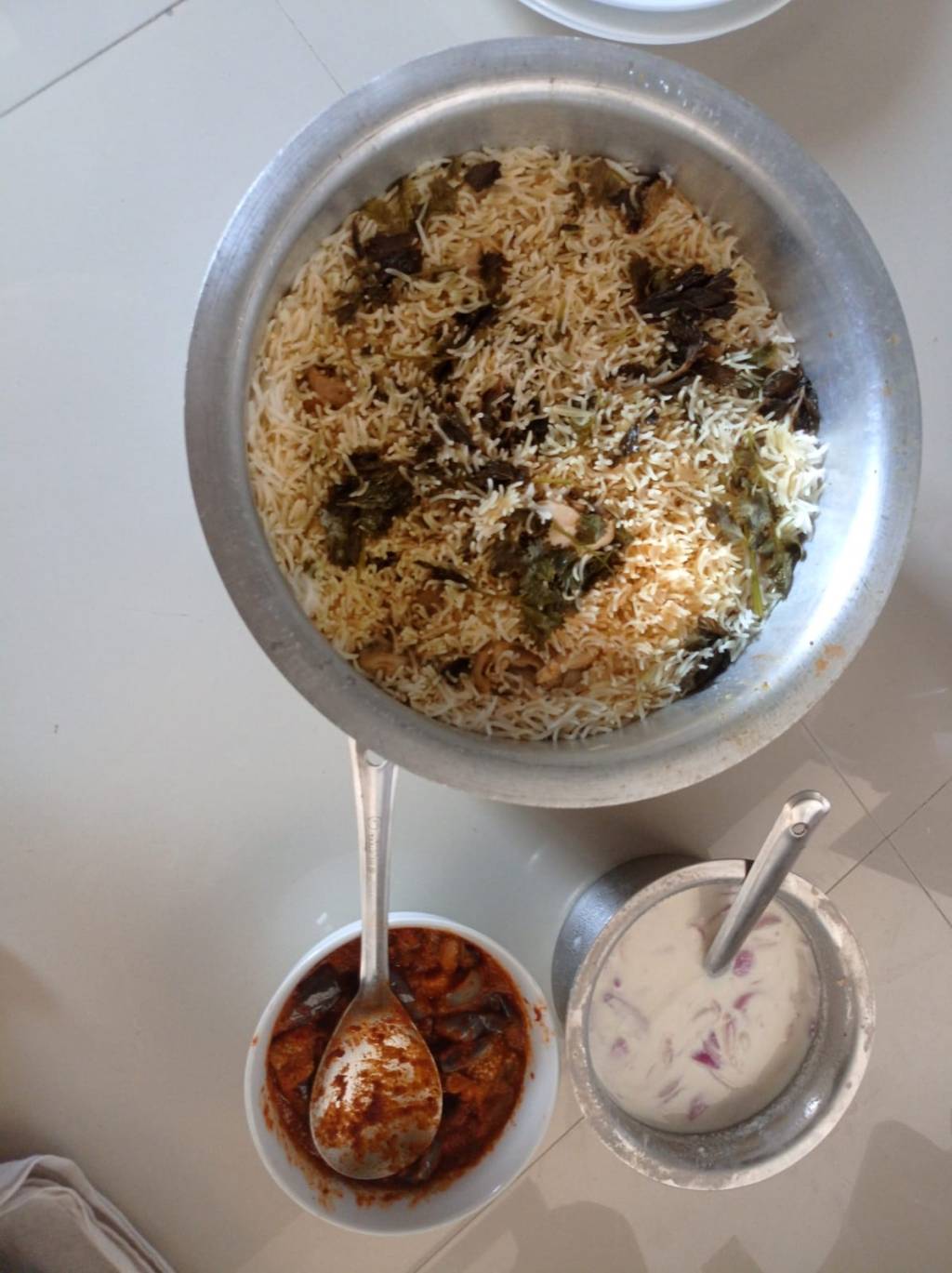
In the beginning of this year, it was great to have some of our Mobile Girls – Kalpana and Beula and their family – visit me for beer, beef biryani, beach and a slumber party. We dearly missed Madhu, Lakshmi, Abhinaya and Satya. It was the only time my father got to meet them. I will sorely miss him at each show and moment that I make this happen. Some of the rolling cast members made it to a meeting. We discussed how to make the play, what the play can talk about, what are the different devices to use, and the importance of biryani to the play. Madhusree the illustrator of the book sketched bits of our meeting, and so did Yazhini.
When it came to making biryani on stage, the cast that came in were not all beef eaters, or even meat eaters and definitely not biryani masters. While training to become one could still be in the long-term plan, this also opened up ideas that there could be collaborations to bring in the biryani.
While participating in the GROW edition of the root.ax Storiculture Company Lab to develop ideas for this project, many people suggested collaborating with biryani brands as sponsors. This could be a viable and good way to keep this financially sustainable. However, we do want to be extremely careful who we take on as a sponsor, funder, or partner. They have to see the dialogue of this project as a part of their practice too – in terms of how they respect and treat those who do the labour to run their business, their consciousness towards the environment and more. And it would be best if it is an extension to the dialogue of what it means to be woman – as an intersectional identity.
After setting the show date, I contacted Srijith of the Trans Community Kitchen Chennai and Kattiyakari Theatre Group. A dear friend. ❤
The kitchen was the idea of Srijith and Aruvi, a theatre director and a student of gender studies in Hyderabad University, respectively. They were joined by Sharan and Anish, both local activists for transgender rights. It was set up in Chennai during the height of the Covid pandemic with the mission to feed anyone at sight without a question asked. With 15 trans women of various ages and backgrounds working as cooks, helpers and more, funded through donations, they fed almost 1000 people a day and distributed 65000 packets of food. (Read more here)

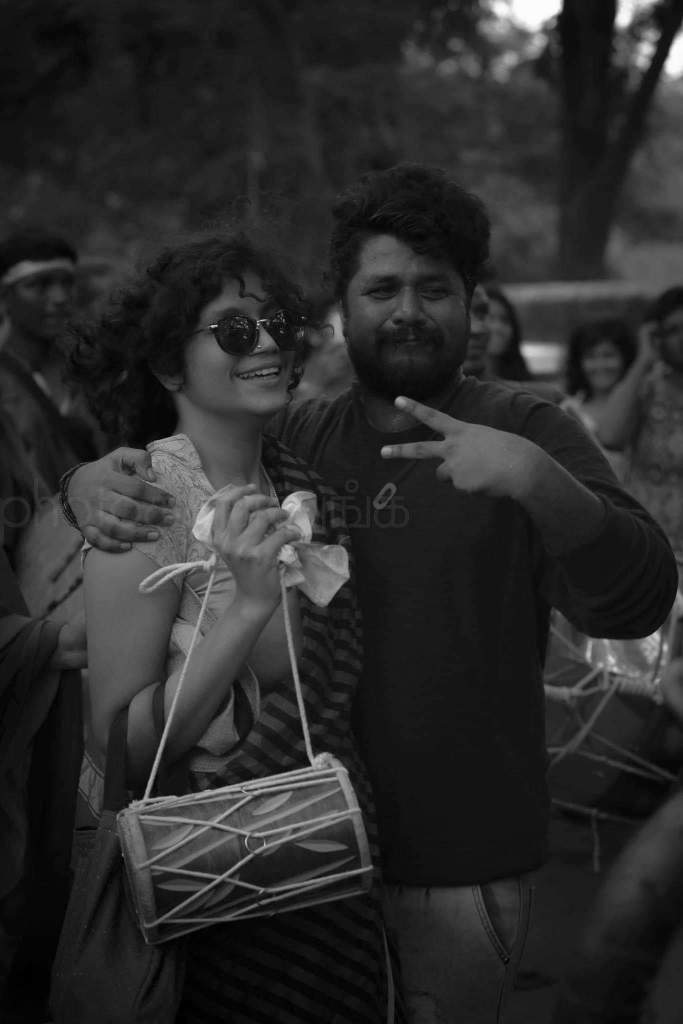
Srijith was extremely excited to receive the call from me, pouring so much love towards our play and me… as he has always greeted me. Here’s a picture of us at a Pride March –
I asked him if the kitchen could provide us the biryani for the first show in Besant Nagar on 11 December 2022. We worked out how they could provide it and then an even better idea struck him. Could the biryani be from Nooramma’s Durbar?
Who is Nooramma? What is Nooramma’s Durbar?

Play Note –
Food is political. Food is an identity. And in the politics of food, some are marginalized and some food choices are privileged above others. In this society that discriminates due to gender every step of the way, food politics plays a major role in the life of transgender people. How has the politics of food affected trans people? What effect does these politics have on their livelihoods, ways of life, social organization, and relations with the larger community? We look at a family and a lineage of trans food artists – a lineage made not by blood but by chains of community and nurturing, and we see how Nooramma, with the generations behind her, rises to the challenges of the politics of food. This nurturing is not just restricted to food, but rises to the challenge in life and even in death. Who are the elders of this community, that trans people who have left their home have entered as a chosen family? What stories do these elders have to tell us? Here is Biryani Durbar, a fictionalized account based on the true testimonies of trans generations and their lived experiences.
Director’s Note –
Nooramma or Biryani Durbar has been a lifelong creative dream for me, one that stands as a testimony to the way that the trans community has embraced me. The trans community is one that people enter having shed away the trappings of caste, gender, and religion that shaped their past lives. It is a community that has a way of life that goes beyond the roles imposed by caste and gender, and has its own set of practices, a ‘religion’ that takes inspiration from many sources. In today’s political climate, it doesn’t, therefore, come as a surprise that the marginalization faced by the trans community also has a religious dimension.
In the current state that we are in, where religious polarization and caste tensions are at historic heights, it becomes vital for us to listen to stories from the margins. What stories does the trans community have for us, and what can they mean for our lives?
As a director, my work is also informed by the work that I have done with the trans community, especially in organizing a ‘Trans Community Kitchen’ that fed the hungry, homeless, marginalized, and hospitalized, during the second wave of COVID-19 this year. In the Trans Community Kitchen, I saw the transformation of how the community is perceived, a reversal of roles from being the ones who begged for food to those, when given the resources, can be providers of nurturing care. This is also a politics of food, and what food means to the trans community.
Something else that struck me about the community, and this applies to every marginalized community in general, too, is how only gruesome deaths make it to the news. We read these news articles often – queer community member kills themself, queer commmunity member gets tortured in conversion therapy. It tends to define the queer community in great tragedy. Beyond these great tragedies, trans people have lives, loves, hopes, dreams, disappointments – just like anybody else would – but we don’t get the opportunity to see their ordinary lives.
It is in this sphere of ordinary life that the politics of food and nurturance is situated, of both survival and care, of feeding and caring for a community as one would water a plant and watch it grow. It is here that Biryani Durbar is also situated, and I hope that you’ll see the queer community in this new light through my play.
Love,
Srijith.
Srijith and I discovered over the phone call that we had also recently both become die-hard fans of a new TV serial on Sun TV called Ethir Neechal. TV serials often have these festive cross-over episodes where two different TV serials merge their story worlds together for a special set of episodes. What if for the first time two stage plays came together this way? Two plays that deal with food politics and women at work and its politics. Synergy!!!

The play initially had ended at them trying to eat the biryani, which had burned down. What if they ordered a packet from Nooramma’s biryani durbar? This is how a completely a new feel to the end of the play was born.
There is no limit to my gratitude to the Trans Community Kitchen, Nooramma and Srijith for bringing such meaning and love to the role biryani plays in The Mobile Girls Koottam play. I can’t wait for show day!
 The Mobile Girls Koottam
Leave a comment