Narrative Report: Chapter One
11 December 2022, Thiruvalluvar Nagar Community Hall, Besant Nagar
There is so much of this play that truly depends on aspects outside the text. The text, while very important, it is also only a framework within which the actors are attempting to open a space. From the moment of the first parai beat, we are deliberately trying to destroy the fourth wall (or are we putting it behind the audience?)
The two nights we spent rehearsing at my house at the outskirts of Chennai city, personal life proved to be a tornado for most of us. After my father passed away I had not housed many guests at home. Suddenly, during these two days, the house was brimming with life – its ups and downs. A cyclone was tearing through the city. Two actors braved the storm to get us pizza. A cast member and I had to deal with accidents at home. And yet it all went into the mess that we were deliberately trying to create – a sense of a lived-in space, where chaos is an everyday.
I find it very difficult to operate and move around in clinically clean spaces that have been nauseatingly designed to its last aspect. I feel like I might break something very treasured or important.
When watching Tamil theatre, especially dealing with issues of oppression, an extremely metered and forced aesthetics, detaches me from the performance. There is a splattering of folk art forms or body movements or musical voices that are sometimes used out of context. This has its advantages when an image is meant to affect from the outside. If the out of context art form is a deliberate absurdity, that too is excusable. But most of the times, the actors seemed to be putting themselves on a pedestal of having learned a politics and almost preaching to the audience. When they do break the fourth wall, it is a stylistic choice albeit political, but almost from a space of asking the audience, “how can you exist without knowing this? How dare you not do something about this?“
I am constantly asking the actors, ‘Why are we making this play?’ The first round of answers were tending to lean upon the ideas of awareness and political awakening. I had to shut this down and will continue to do so.
We are already dealing with a very crucial political issue where women workers have trusted allies with their life stories and asked us to take this forward for them. None of the actors are factory workers. The only actor who comes from a working class lived-experience is Selvi. She has worked in a textile shop, a supermarket, a hotel, a bar and has continued her work as a caretaker for my child and parents at my home. The other members come from different vantage points of caste and class privilege. This includes me. Though Selvi might be forging a debut in theatre through this show with her month-long workshop with Pritham K Chakravarthy and finding new knowledge about moving body and voice in a space, it is the others in the crew who will need to learn a lot from her. From how we hold our bodies in the space to how we invite people into the space to what we are ultimately attempting to forge by making a space to what we understand of what we choose to open our mouths and say or ask.
In the Mobile Girls Koottam play, more than affecting an audience, I am attempting to connect and learn from them. I am coming from a space of “I definitely do not know enough. What more can we do? What are the different ways in which we can do this?” I want to learn what this play and this dialogue needs to be about from everyone who comes into our home, not stage.
Then, the text becomes a fulcrum around which something else can be facilitated.
The preliminary goal is to find how the play becomes a floor to find more stories. I call this the preliminary and not ultimate goal, because once you collect a story you open up the question – what do you attempt to do with this story? With more shows, I will be able to articulate more about this.
The performance was initially supposed to happen outdoors on a podium stage. While the outdoors aspects were interesting, I definitely did not want to say this story from a higher level. So, we had decided to set up the tea shop up there, but keep most of the action down right by the audience.
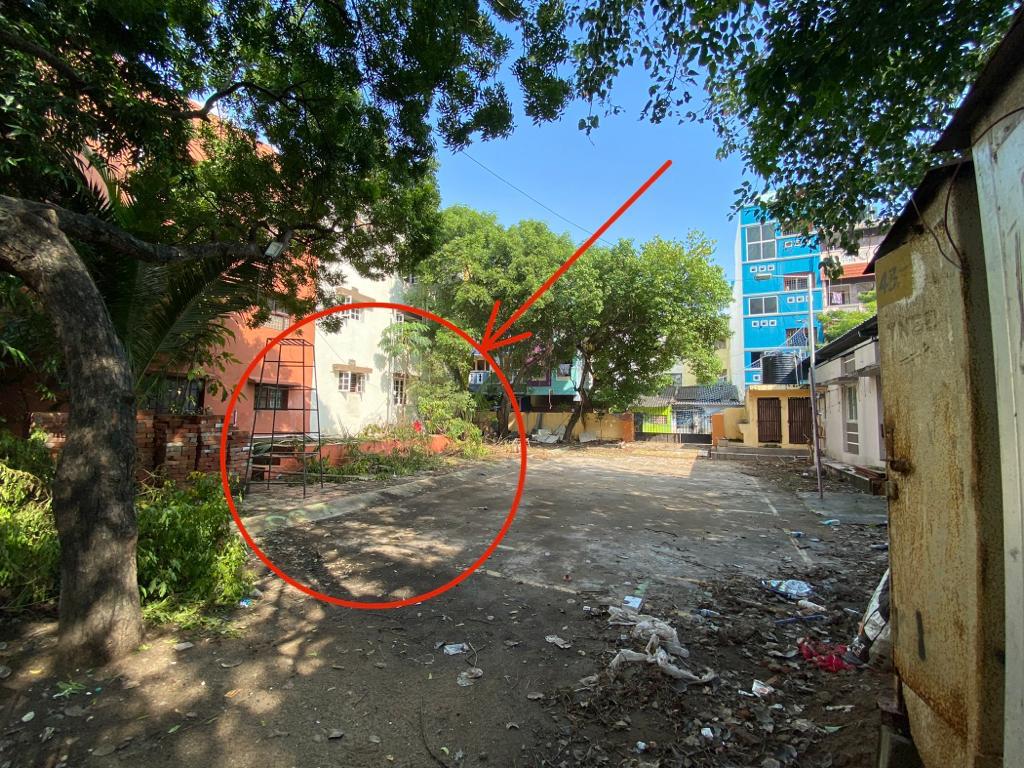
Maybe it was our luck that a cyclone ravaged the coast that weekend. We had set a date, and it was the only day we could show the play to Madhumita Dutta, Kalpana and Tinku (Beula’s son). The show must go on.
To avoid the rain, we decided to move the show to the indoor space, which turned out to be serendipitous.
As you will see in the video recording, the slanted roofs, the clothesline that ran across one side, the nighties, the parai, the mess of floor mats, yet another serendipitous find of an abandoned fast-food stove, added to the ambience that the audience had walked into someone’s home and not a “performance”. With the kids cutting across the space and moving about as they wanted, you will also see that the audience feels welcome to interrupt whenever they feel the urge to do so. Somewhere the attempts are taking fruition. All factions of the audience unanimously felt like they were inside somebody’s house and felt like they had shared an experience. The space was flat, democratic and it ate with people.
The artistic or technical feedback mostly stressed upon some of the dialogues not being audible to the back rows. Someone also pointed out that the serving of food could be more timed and controlled as not to distract from something being said. There were people asking us to hire voice trainers and more backstage crew. I, however, feel these problems need to be approached from a different viewpoint. Training is necessary. Organisation is also necessary. But the how and why needs to come from a place that does not once again detach the audience. In my future reports, I will elaborate upon why I want to move away from the terminologies – audience, spectators and even spect-actors. Another artistic discovery was this is not theatre that needs a light design, it needs to lean into making use of the available.
The main issue I feel happened with how we had hurriedly seated the audience in a very traditional theatre manner – in rows of mats and chairs. This immediately impaired the accessibility both ways. At home, if you are not heard from far, you are asked to come closer and repeat yourself. However, when you seat the audience in a traditional manner they inevitably become spectators and some amount of facilitation makes them act. But there will always be a row of people who almost feel forgotten in this seating design. This is the main issue I want to tackle in the future shows.
The comrades who spoke from the viewpoint of activism, research and social work came from two spaces. The first was solidarity. They appreciated the honesty of directly implicating Nokia. They appreciated the tenor and the space-making of the play. However, they critically analysed that the agency of women bodies and voices in the work space and the setting of the factory meter was not given enough space in this show. I agree to this and intend to investigate the missing pieces.
The comrades who spoke from their lived experience of working class struggles identified with the characters and critically pointed out the responsibility of how we are going to in the future open out this dialogue to other working women’s experiences. I repeat my questions – how to collect experiences? What does one do with the collected experiences? Kalpana pointed out that Dalit comrade we mention as the one who encouraged her to do a leadership training has been named wrong (even though, during the doctoral research she had mentioned this name). We will definitely edit the name out and keep the idea.
Several years back I had been to a Contract Workers Union to conduct a workshop on how they could use new media and the meme culture to open up democratic spaces to conduct their dialogues. We even launched a Facebook page to publish tiny one-line stories. After the show, it was lovely to meet friends from there and discuss future shows and the revival of the meme project.
The gender and sexuality bending and the inclusivity came from a very natural lived experience. The Trans Community Kitchen and Nooramma became a part of our family, of the Mobile Girls’ home.
While we made home, fed our guests and drew them into our ponderings, with the exhaustion of the three day exercise we forgot to throw open the floor for a facilitated discussion at the end. The Trans Community Kitchen’s biryani had been set up outside the space. We should have brought it in and continued eating and talking with everyone. Since it had skipped my intuition to do this, we were left with discussing all of this individually as guests stayed back and loitered as they talked to us for the next hour.
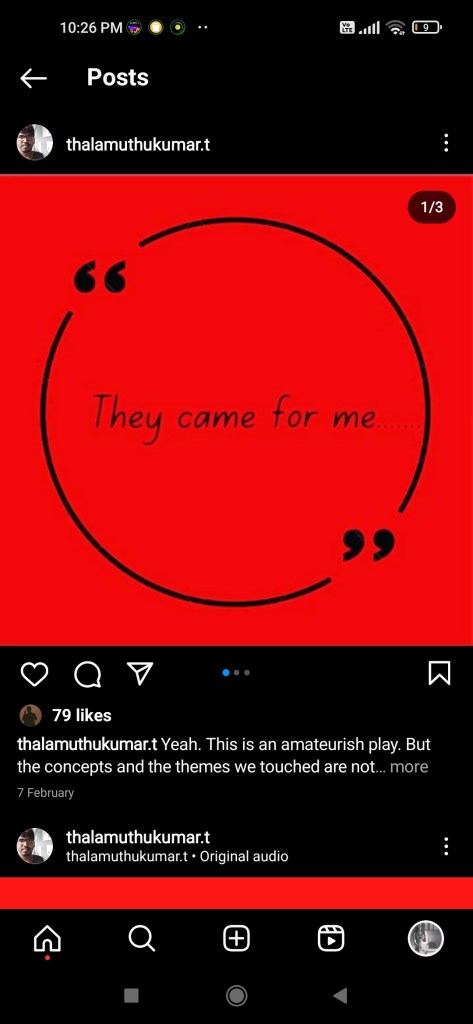
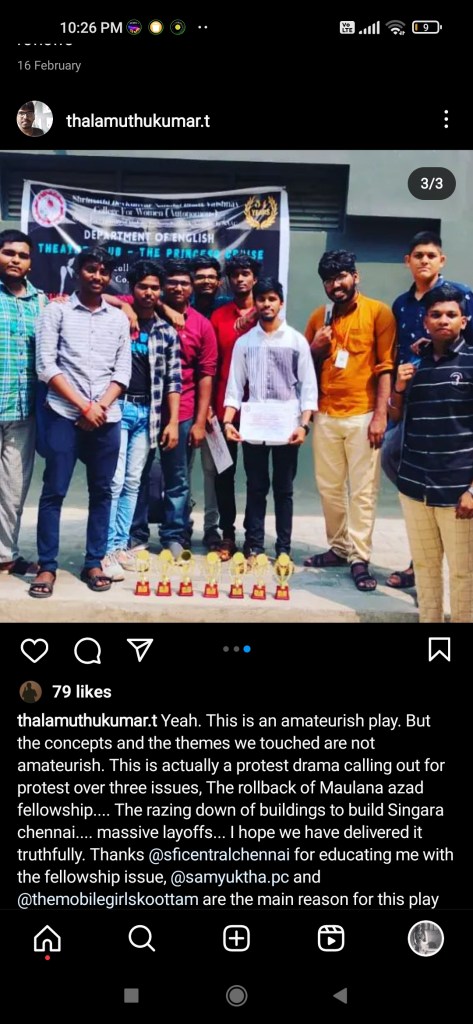
One of the interesting offshoots of learning to make space like this and sharing it over the night with our guests, has been the making of a small play by an English Literature student Thalamuthukumar K (a name with great significant meaning of historical resistance) called “They Came for Me”, which was performed by a few boys in their lungis.


The something else I am attempting to articulate is somewhere connected to this – creating agency to inspire more work like this, maybe even to collect a festival of dialogues that travels with our tea shop.
 The Mobile Girls Koottam
Leave a comment