March 11, 2023 – Jangamma Collective, Bengaluru.
Maraa had organised the third show at Jangama Collective, which has now turned Rajiv Krishnan’s space into a performance venue. Jangama is ‘a collective of five actors/performance-makers that strive to create work that may speak across cultural and linguistic barriers through their own forms and languages. They believe in creating cultural and political awareness choosing theatre as their way of expression. As an extension of this, the group has engaged itself in creative processes like education, literature, publishing, cinema and social struggles.‘

I came away from there hoping we had also watched one of their shows and performed together.
This show was beautiful in a very different way, but I was already very skeptical going into this. The audience was filled with more people who were going to approach The Mobile Girls Koottam as an artistic piece of work, instead of a way to experience life. Immediately, I saw the actors kind of regress back to their usual ideas of audience interaction, even though they gave themselves space to flirt with the audience, answer back and engage. However, it came from the “theatre training” of entertaining and engaging the audience.
I spent the entire show observing what really happens to the audience when the show is conducted this way.. There were two little children so overjoyed with the snacks that was available. One with a terrible cough.
We had a bit of feedback at the end of the show about being more clear about certain aspects of what the factory did for the women and how we need to “show” more factory work. But the play is not about showing at all. Then what is the show about if we are not “showing”.
There are glimpses of actual factory work in the first scene and in the television. There are a multitude of lived experiences of working women in the play.
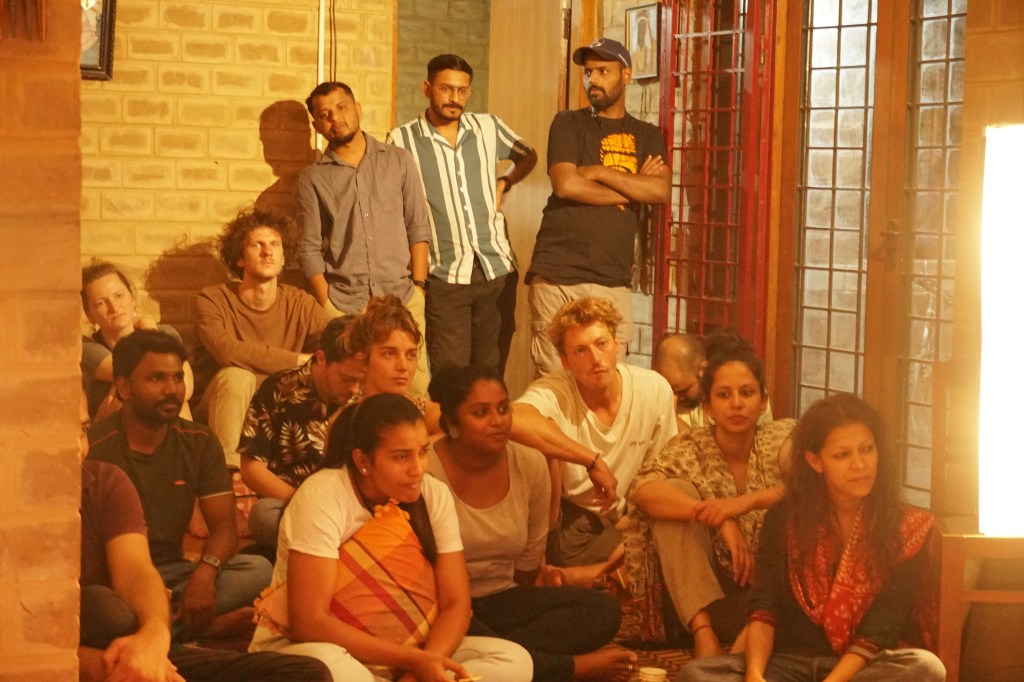
It was beautiful to find out that people were able to access the play beyond not knowing Tamil. It was a multicultural mix of people who managed to access moments of lived life, beyond language and context, and still understand what was happening in the story and the process. Selvi also went ahead and broke the ice by interacting in the bit of English she could muster.
One particular feedback will keep revisiting us in 2023, which I will have to take a deeper look into how to bring it in, and that is the hierarchy of the workers within the factory and how they perceive the work they do there and the differences it causes between them. One of the initial ideas is to bring this in during the discussion regarding the compensation. We will find its home during the tour.
After the show, however, my burning question to the cast was why they completely ignored that there was a child in their house, coughing so badly and none of them thought to offer water or ask the parent if they need some help. Naren and I had noticed, but they hadn’t. They were so engrossed in ‘performing’ the “show”.
There are problems of approaching at least MGK as ‘a piece of work’. As the show must go on. As some kind of a product to offer others. It only works if the cast is actually ready to accept this process as their own lived experience. In the next show, they are given no choices about this.
 The Mobile Girls Koottam
Leave a comment