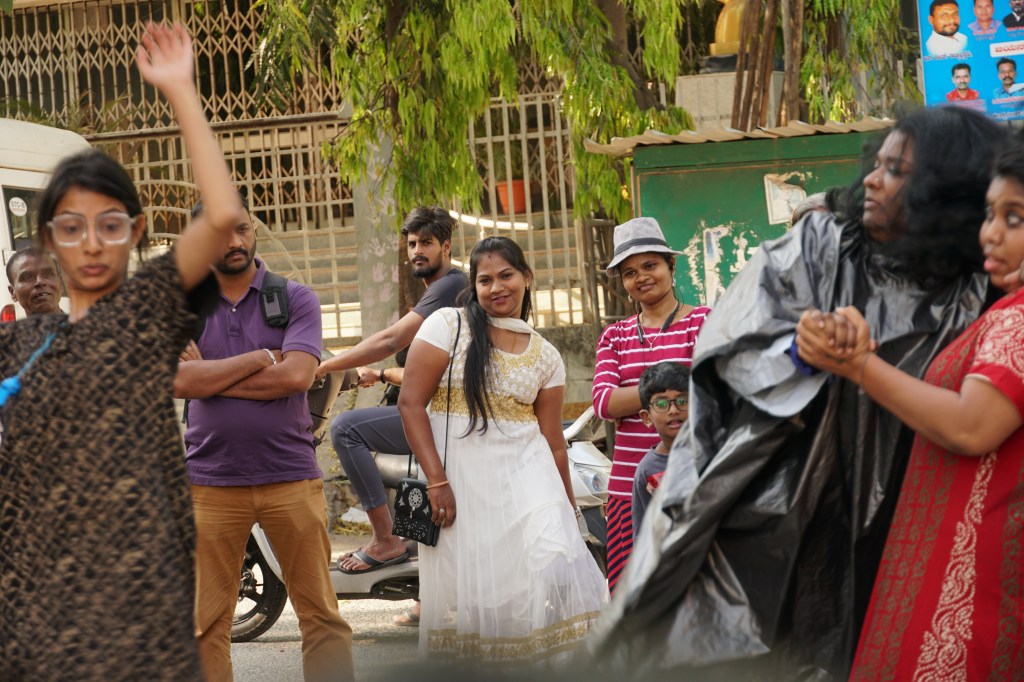
March 12, 2023. Arsu Colony, Bengaluru
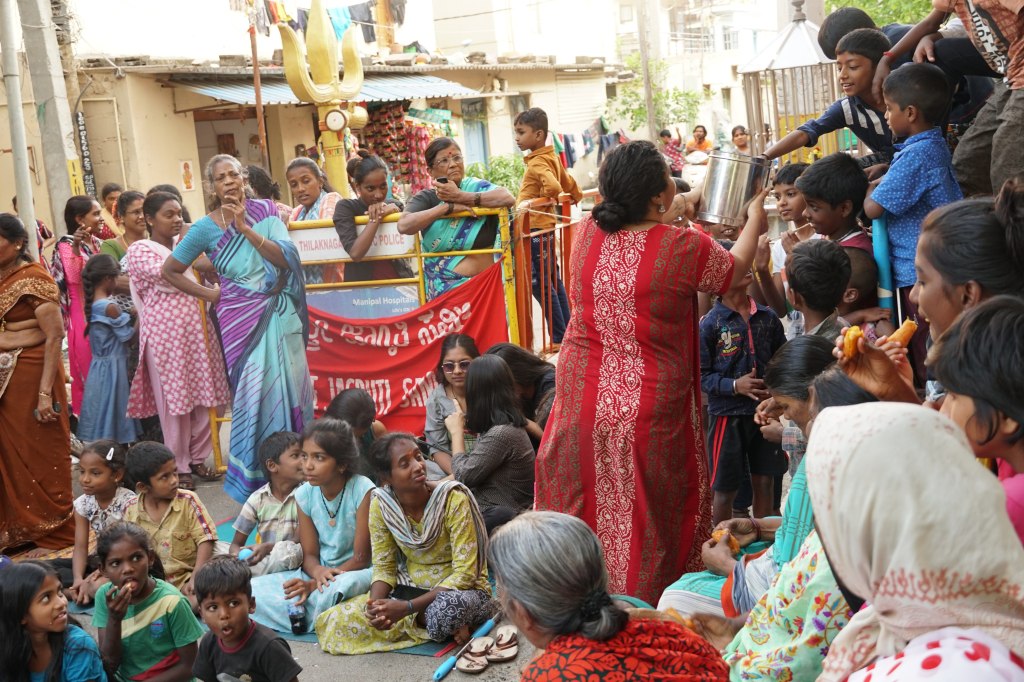
This show happened in the middle of the road. A real tea-shop vandi became our tea shop. We walked through the basti with an army of children singing along with us and convincing all the women and children to join the show. Maraa had organised us the show in collaboration with a domestic workers union.
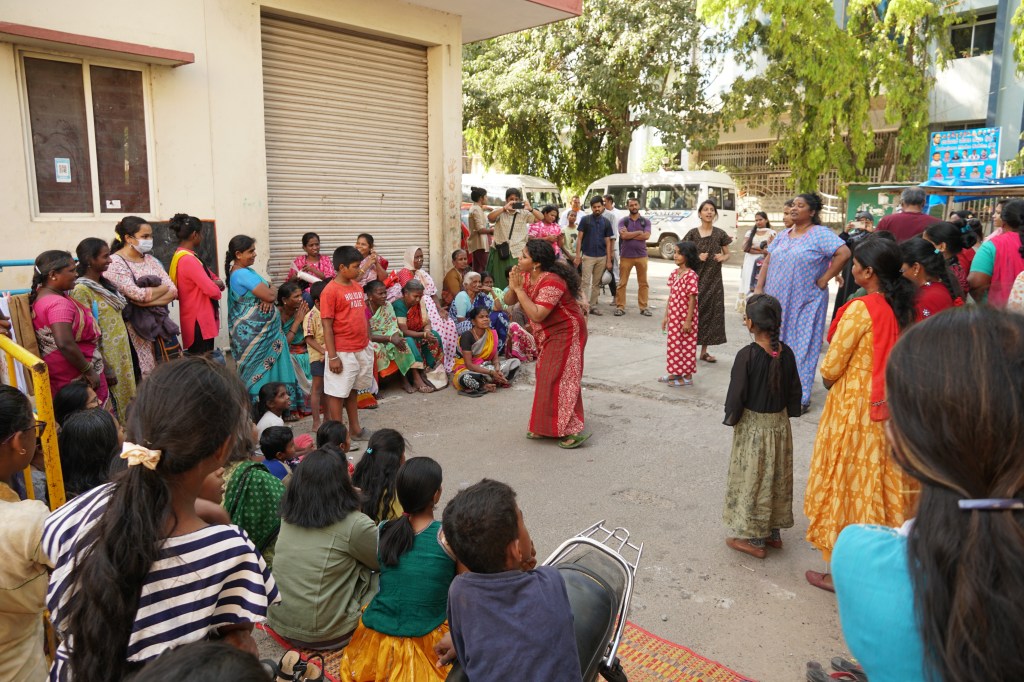
The script did not escape through a window, it was literally smashed on the road. The show was exhausting, but it brought us closest to the truth of what actually MGK is all about.
The children were noisy, intrusive, and smart alecs who had things to say about everything we said. The women were powerhouses who bombarded us with jokes.
In between the show, a man, a bit high on liquor, called us from behind. He stood a bit far away and told Atchaya that if women dress like this, of course they will distract men and make them cross boundaries. Atchaya immediately pulled up her nightie into a knot and began charging at him with her words. But what was more amazing were the women in nighties and house sarees in the audience who joined in and asked the man to come to the center and join the conversation, instead of being a coward and trying to throw a statement at us from the back.
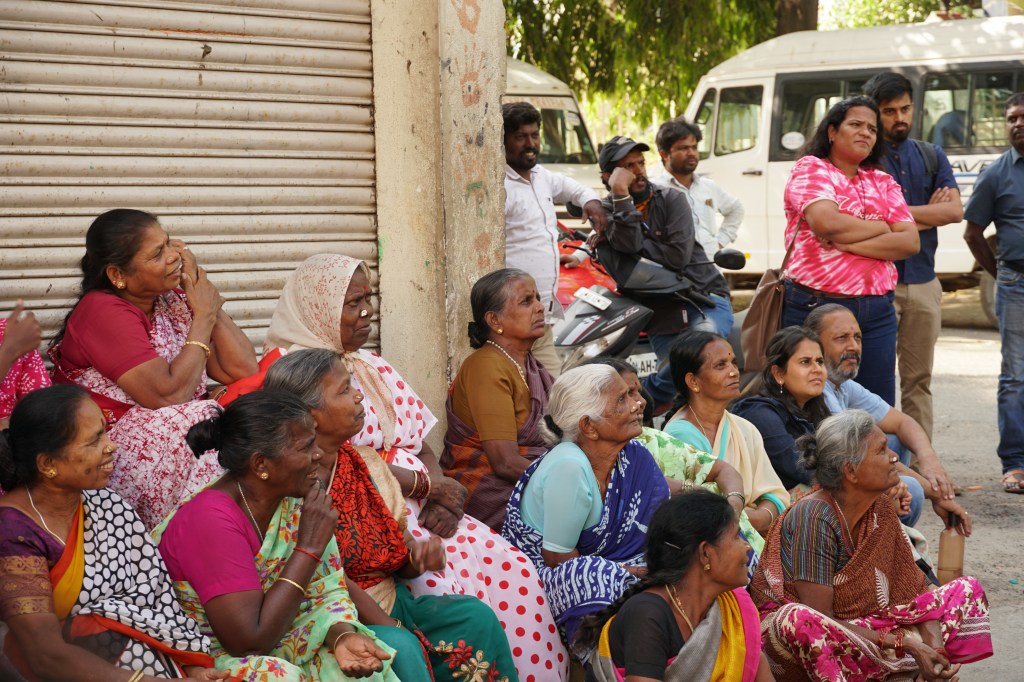
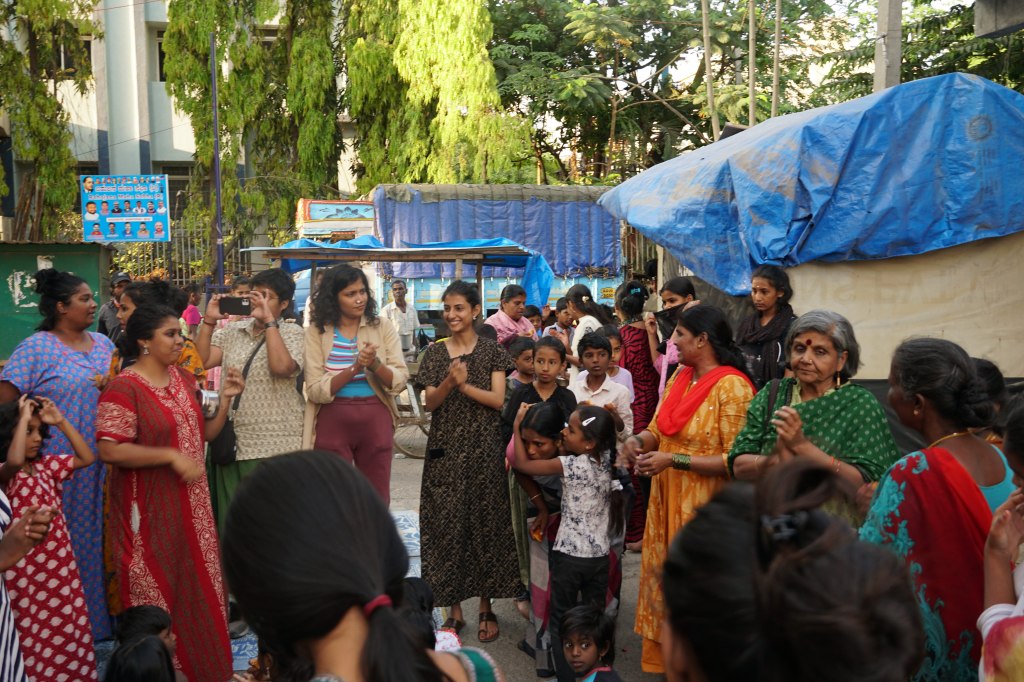
We were drawn thin, with conversations we had to deal with from every corner. This was not an audience. This was home. This was the chaos of home out on the road.
At one point, a social activist who has worked with this community pulled me aside and asked us to wrap up the play as people in this community do not have so much patience for a performance. She had worked with the community for a long time. At the end of the show, it was good to listen to her sing work songs and protest songs with the women in the community.
However, look at how privilege makes us speak for others. I was audacious and irked. I went and specifically told the cast to extend it as much as they can. We had no mics. We were sure it was impossible to hear most of what we were saying. But somehow the community got it.
When MGK finally finished and they gathered around us, even the unruly children at our home on the road, asked us to stay back for the entire night. They wanted to spend the whole night with us, not us the troupe, but with us inside the Mobile Girls Koottam.
This was the most revolutionary experience to happen to the cast. This was the place to understand that this is not a street play, but it also has to happen on streets. We obviously have to find equipments like mics that can help us, but maybe we could also find a way to build intimacy on the streets with all the noise.
One of the first experiences we had to unpack was the conversation with the man. At the end of the play, out of no provocation, still standing behind and far away from us, he apologised to us. We let him go at that.
There was a moment of possible unsafe touch to my daughter from another young man and we had to deal with the trauma that it was throwing up. When confronted by Selvi, the man started completely denying it and her type-casting him as a man from a slum. Selvi, however, did not approach it from that viewpoint, but that she has lived around many men like this, and she also comes from a space like this and was ready to go in for a big fight.
In between, the unpacking of feeling unsafe, kind of thrown off in accessing our audience, we had dropped the masks of being “performers” finally. This was not a “work of art”. This was now slowly going to become something more, but I will have to find techniques that encapsulate all of this.
One of the performers and me, however, felt more at home in Arsu Colony. It felt like home. It felt familiar. Performing outside that temple on the middle of the road in the comraderie of all those women felt like the community we grew up in. Our hearts were filled with this.
 The Mobile Girls Koottam
Leave a comment